
Giant Hogweed Removal
Giant Hogweed is one of the most difficult invasive plants to deal with in the UK. It spreads quickly, causes serious skin injuries through its toxic sap, and is subject to strict legal controls. If you have it growing on your land, you are legally responsible for preventing it from spreading. Failure to act can result in fines or enforcement action under the Wildlife and Countryside Act 1981.
Giant Hogweed Form
Comprehensive Guide to Giant Hogweed Removal
At TP Knotweed, we specialise in the removal of invasive species, including Giant Hogweed. This guide is written to help you understand how to approach the problem safely and effectively. Whether you’re considering doing the work yourself or want to know when to call in a professional, you’ll find practical, detailed answers below.
Should you remove Hogweed from your garden?
If Giant Hogweed appears in your garden, you should not ignore it. Even a single plant can spread quickly and cause harm to people or animals that come into contact with it. Its sap can lead to serious burns and blistering, and the plant produces tens of thousands of seeds each year. Once established, it becomes much harder and more costly to remove.
Although it’s not illegal to have Giant Hogweed growing on your property, you are legally required to prevent it from spreading to other areas. This includes both natural spread, such as seeds being carried by wind or water, and unintentional spread through disturbed soil or contaminated tools.
Removing the plant is the safest option — for both health and legal reasons. If you leave it untreated, it can quickly take over garden borders, paths, or even neighbouring land. It also poses a higher risk if you have children, pets, or regular foot traffic nearby.
If you’re unsure whether you’re dealing with Giant Hogweed, we cover identification in the next section.
Table of Contents
How to identify Giant Hogweed (and tell it apart from Common Hogweed)
Before you attempt any form of removal, it’s important to confirm whether the plant in question is Giant Hogweed. Mistaking it for a less harmful species could lead to unnecessary work — or more seriously, expose you to risk if you underestimate the plant’s toxicity.
Height
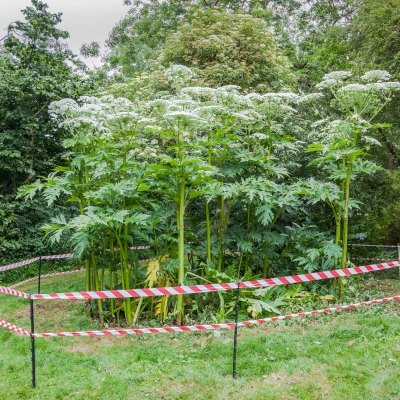
Mature plants can reach extraordinary heights of up to 5 metres (16 feet), making them one of the tallest herbaceous plants in temperate regions. In their first year, the plants usually form a basal rosette of leaves; in the second year, they send up the tall flowering stem.
Stem
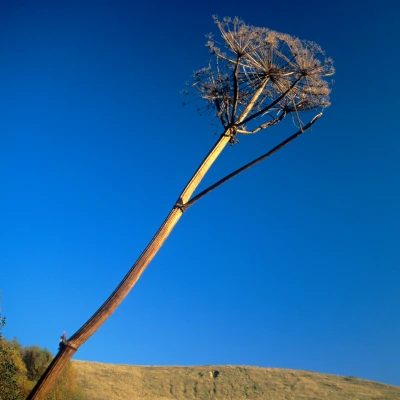
The stem is thick (up to 10 cm in diameter), hollow, and prominently ridged. It is easily recognisable by its bristly white hairs and purplish blotches or streaks. These markings are an important identification clue, as similar species lack the intense blotching.
Leaves
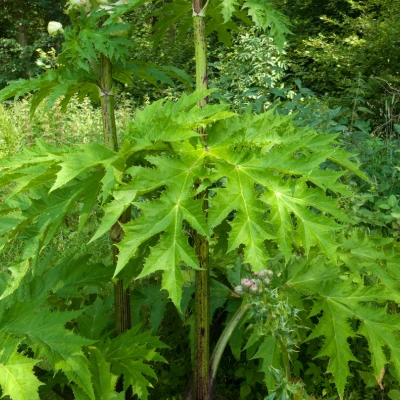
The leaves are enormous, deeply lobed, and sharply toothed, sometimes spanning over 1 metre across. They have a pointed, jagged appearance and a rough texture. The underside of the leaves is usually lighter green and coarsely hairy.
Flowers
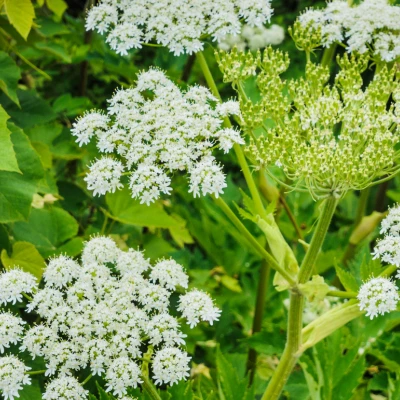
In mid to late summer, Giant Hogweed produces striking large white umbrella-shaped flower clusters (called umbels), often up to 80 cm in diameter. Each umbel can contain thousands of small white flowers, contributing to the plant’s prolific seed production and spread.
Seeds
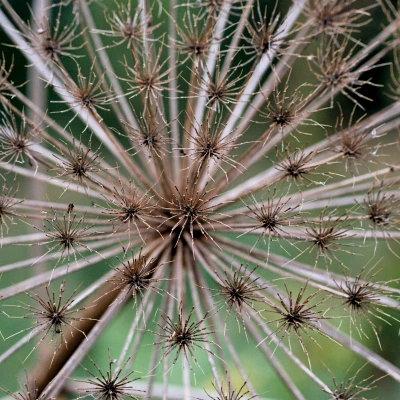
The seeds are flat, oval, and paper-thin, with brown streaks or lines running lengthwise. A single plant can produce up to 50,000 seeds, many of which remain viable in the soil for years, a major factor in its aggressive propagation.
Habitat
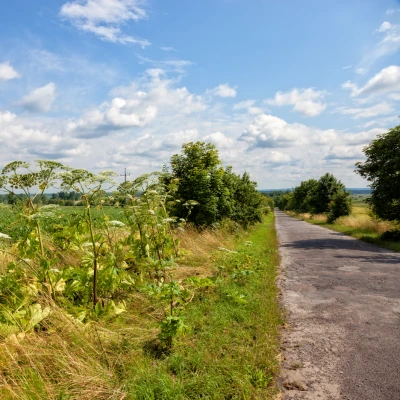
Giant Hogweed thrives in moist, nutrient-rich soils, especially in partially shaded areas. It commonly grows near rivers, ditches, roadsides, hedge banks, and abandoned land. In gardens, it can often be found near fences or shaded borders, spreading unnoticed until it matures.
Giant Hogweed vs Common Hogweed
It’s easy to confuse Giant Hogweed with Common Hogweed (Heracleum sphondylium), especially in early growth stages. Here’s how to tell them apart:
| Giant Hogweed | Common Hogweed | |
|---|---|---|
| Maximum height | Up to 5 metres | Up to 2 metres |
| Stem colour | Green with purple blotches | Green, no blotching |
| Stem thickness | Up to 10 cm | Usually under 3 cm |
| Leaf size | Up to 1.5 metres across | Smaller, less jagged |
| Flower head | Up to 80 cm, flat-topped white umbels | Up to 20 cm, more domed shape |
| Toxicity | High (sap causes severe burns) | Mild irritation in some cases |
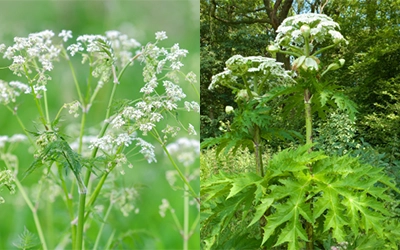
What is the big difference?
Both species are members of the carrot family and share similar flower shapes, but only Giant Hogweed poses a significant health risk. Removal techniques are largely the same for both, but the need for protective clothing, disposal precautions, and legal responsibility is far greater with Giant Hogweed.
If you’re still uncertain, taking a clear photo and consulting a specialist can help confirm identification before you proceed.
Why is the Giant Hogweed so Dangerous
Giant Hogweed is not just a nuisance plant, it poses a genuine health hazard. The danger comes from its sap, which contains toxic compounds called furanocoumarins. These chemicals react with sunlight and can cause severe skin damage through a condition known as phytophotodermatitis.If the sap touches your skin and is then exposed to UV light, you may experience:
- Painful burning or stinging sensations
- Large, fluid-filled blisters
- Red or darkened skin that becomes sensitive to light for months or even years
- In more serious cases, long-term scarring or skin discolouration
Symptoms usually appear within 15 to 48 hours of contact, and there is often no warning sign at the time of exposure. This delayed reaction makes the plant particularly dangerous, especially for children who may brush past it unknowingly.Contact with the eyes can lead to temporary or permanent blindness.The risk also applies to pets. Hogweed is poisonous to dogs. They can suffer similar symptoms if they come into contact with the sap, especially around their nose, mouth, or paws. If a dog rubs against a broken stem or chews on the plant, they may experience burns or inflammation. As with people, symptoms often appear after exposure to sunlight.Even after being cut, the plant remains active for several hours. Tools, gloves, or clothing that have touched the sap can continue to cause injury if not cleaned properly. This is why full protection and caution are always needed when handling Giant Hogweed.
Preparation for Removal of Hogweed
Removing Giant Hogweed is not something you should approach casually. Without proper protection, even a minor slip can result in serious injury. Before you begin, make sure you are fully prepared, both in terms of equipment and understanding the risks.
What to wear
You’ll need appropriate tools to reduce direct contact with the plant. This may include:
- Waterproof Gloves that cover up to your forearm
- Long sleeves and full length trousers
- Waterproof or rubber boots (Avoid fabric and leather)
- Eye protection, such as safety goggles or glasses
What to use
You’ll need appropriate tools to reduce direct contact with the plant. This may include:
- A sharp spade or garden for for digging
- Secateurs or shears for cutting stems or flower heads
- Heavy-duty bin bags for containing plant waste
- A container or bin to safely transport cuttings, if needed
*Avoid using powered strimmers or mowers, these can spray sap in multiple directions and increase your exposure risk.
Environmental considerations
Try to carry out removal on a cloudy or overcast day. Sap reacts with sunlight, so avoiding direct UV exposure reduces the chance of injury. Wet soil can also make digging easier, especially when removing roots.
After cutting or digging, wash with hot soapy water your tools and footwear. This action will remove any sap residue that could remain active for hours. Don’t forget to wash separately contaminated clothing.
What NOT to do
- Don’t touch the plant with bare hands.
- Don’t burn or compost the waste.
- Don’t dispose of it in household bins or council green waste collections.
Methods for removing Giant Hogweed
The right removal method depends on the size of the infestation, the time of year, and the age of the plants. In many cases, a combination of techniques is needed over several seasons. Below are the main methods used, along with their practical considerations.
This is best suited to younger plants or small patches. Manual methods include:
- Hoeing or pulling seedlings in early spring, before they develop a strong root system.
- Digging up young plants using a spade or garden fork. It’s easier when the soil is moist.
- Cutting down mature stems before the plant begins to flower. However, if the roots are left in place, the plant may regrow.
If the plant has already developed flower heads, you can limit seed spread by cutting them off before they mature. Always bag the heads before removal to catch any loose seeds.This method helps reduce seed production in the short term but won’t stop the plant from regrowing. It’s often used as a temporary measure until full removal can be carried out.
Glyphosate-based herbicides are commonly used to treat Giant Hogweed, especially in larger infestations. There are two main approaches:
- Foliar spraying. Apply directly to the leaves when the plant is actively growing, typically in spring or early summer.
- Stem injection. Injecting herbicide into the stem is useful when surrounding plants or grass need to be preserved.
For severe infestations or contaminated sites, full excavation may be required. This involves removing both above-ground growth and the surrounding soil containing the roots and seeds. It is usually carried out by specialists eg. TP Knotweed Solutions & Zirkon and requires safe disposal at an authorised facility. The seed bank is typically between 300-500mm deep and therefore we often carry out a ‘seed scrape’ to remediate affected sites. The soil and plant material is classed as ‘Controlled Waste’ and therefore must be disposed of at a licensed landfill site.Each of these methods comes with risks, particularly when dealing with mature plants. If you are unsure or don’t have the proper equipment, we recommend seeking professional help.
When to remove Giant Hogweed
Timing makes a significant difference when it comes to hogweed removal. Choosing the right moment can make the process more effective and reduce the chance of further spread.
Early spring
This is the best time for you to act, particularly for manual methods. Seedlings and young plants are easier to remove before they develop deep roots. At this stage, hoeing or pulling them out can stop an infestation before it starts.
Late spring to early summer
If plants are already established but have not yet flowered, you still have time to dig them up or apply herbicide. It’s important to act before seed heads begin to form.
Mid to late summer
At this stage, the risk of seed dispersal is high. If the plants are already flowering, you should focus on safely removing and bagging flower heads to prevent seeding. Full removal can then be scheduled for the next season.
Aftercare
Even if you’ve removed all visible plants, hogweed seeds can stay dormant in the soil for years. Follow-up visits are necessary, ideally in early spring, to monitor for regrowth and treat any new plants before they mature.
Delaying removal often leads to larger infestations, higher costs, and increased risk. Performing regular checks and timely action are key to successful long-term control. Also keep in mind that there’s no quick fix for Giant Hogweed. In most cases, complete eradication takes several years. Even after the visible plants are gone, the soil may still contain viable seeds that can germinate in future seasons. Most sites require annual visits for at least 2 to 5 years to ensure the plant has been fully removed.
Cost of Giant Hogweed removal
The cost depends on several factors, including:
- Area covered by the infestation
- Accessibility of the site
- Number of treatments required
- Type of method used (manual, chemical, excavation)
- Disposal requirements and waste volume
When to call a specialist?
Not every Giant Hogweed problem can — or should — be handled alone. In many cases, bringing in a qualified contractor is the safest and most reliable option.
When you should always consider professional help?
You should contact a specialist if:
- The infestation covers a large area or is spreading rapidly
- The plants are mature, tall, or already flowering
- The site is difficult to access or located near a watercourse
- You don’t have access to proper PPE or disposal methods
- You’re unsure about identification or safe handling
- You want to ensure legal compliance and avoid liability