
Horsetail Removal
Horsetail (Equisetum arvense), also known as field Horsetail or mare’s tail, is a highly invasive perennial weed that spreads rapidly through a deep underground rhizome network and wind-blown spores. Dating back 325 million years, this incredibly resilient plant can push through tarmac, disrupt drainage systems, and resist standard weedkillers, making permanent removal a complex process that requires targeted treatment.
Horsetail Removal
What is Horsetail (Equisetum Arvense)?
Horsetail (Equisetum arvense), also known as field Horsetail or mare’s tail, is a perennial weed that spreads through an extensive underground network of rhizomes and wind-dispersed spores. It ranks among Earth’s oldest plant species, dating back 325 million years to the Carboniferous period, long before dinosaurs appeared.
The plant spreads in two distinct ways. In early to late spring, it produces spores from cone-shaped structures at the tips of its stems. Wind carries these spores across considerable distances, though they require damp conditions to germinate successfully. The second method proves far more effective: its rhizome system continuously expands underground, sending up new shoots and establishing dense colonies. These rhizomes can grow as deep as 2 metres below the surface, with approximately half concentrated in the top 25 centimetres of soil.
Table of Contents
What damage can Horsetail cause to your property?
Horsetail causes damage primarily to hard landscaping features such as paving, patios, paths, and tarmac by pushing new shoots up through surfaces and creating cracks. The plant’s rhizomes can also infiltrate drainage systems, leading to blockages and water flow problems.
Damage to hard surfaces
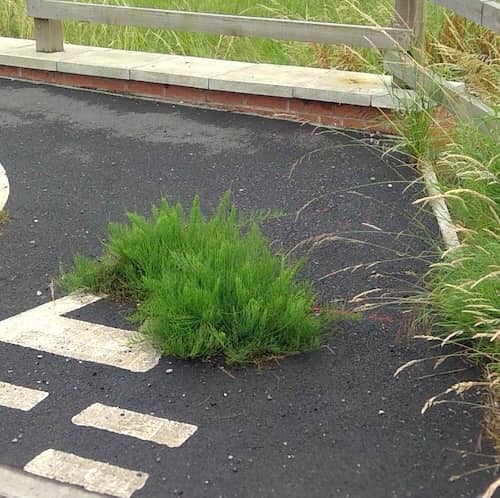
New shoots emerge with a lot of force from underground rhizomes, easily penetrating subbase materials and breaking through tarmac. Early signs are usually small cracks in paths or patios. Winter freeze-thaw cycles make this damage worse when the plant dies back, as water enters the cracks and expands when frozen.
Ecological and financial impact
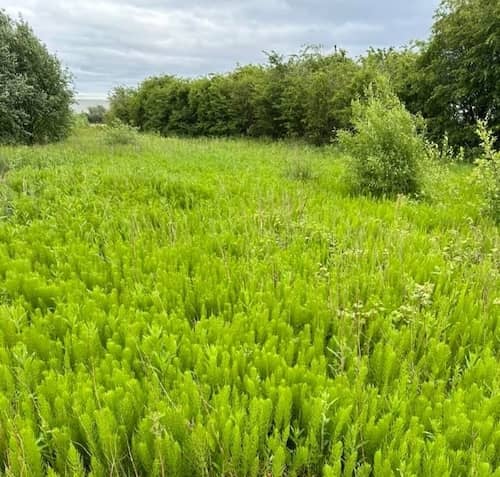
Above ground, Horsetail forms dense clusters that smother smaller plants and disrupt local ecosystems. On construction sites and waste ground, infestations spread rapidly across large areas, making removal both difficult and costly. The plant’s ability to regenerate from tiny rhizome fragments means careless removal attempts can worsen the problem by spreading it to new areas.
Impact on foundations
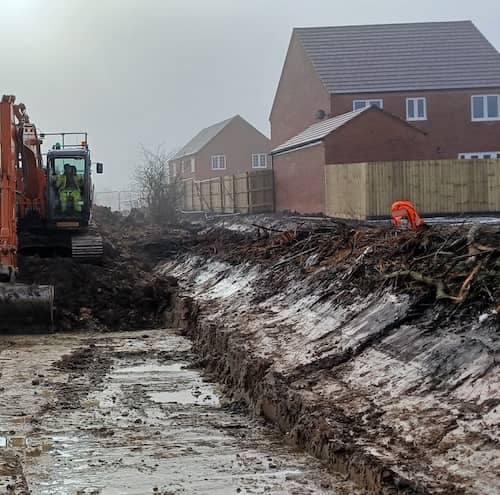
Horsetail does not typically damage building foundations directly. Unlike large tree roots that exert significant physical force, Horsetail’s root system lacks the strength and depth to cause structural harm to robust foundations. The plant instead grows beneath solid structures and emerges wherever it finds weak points or gaps. However, you should still manage Horsetail growth near buildings. Maintain proper drainage, fix leaks promptly, and ensure good soil grading away from foundations to prevent any indirect water-related issues.
Drainage system problems
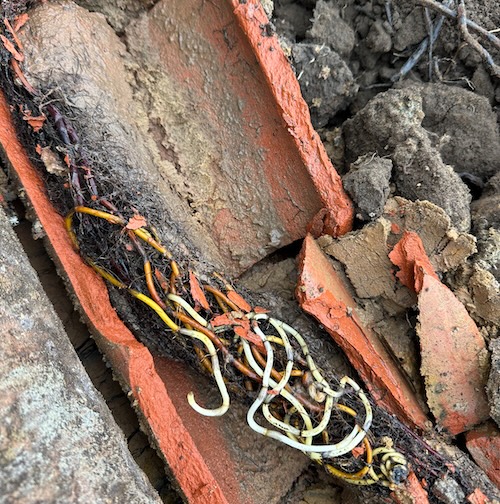
Horsetail rhizomes infiltrate drainage pipes through existing cracks and loose joints. Once inside, they continue growing and cause blockages that disrupt water flow. This compromises drainage system efficiency and increases the risk of flooding and water-related property damage. The fibrous, thin nature of the rhizomes allows them to penetrate small gaps, but this same quality makes them extremely difficult to extract without breaking them into fragments that can regenerate.
If Horsetail spreads from your property to a neighbour’s garden and causes damage, you may face legal action. Even without this risk, prompt action prevents the infestation from becoming more established and expensive to control.
How to identify Horsetail?
Horsetail has two types of growth that change its appearance throughout the year. In early spring, light brown, fertile stems appear with cone-shaped structures at their tips that produce spores. Starting in late spring, green, sterile stems develop that look like miniature fir trees.
The first shoots appear in early to mid-spring as strange-looking stems. These stems are between 20 and 30 centimetres tall and are a light brown colour. People often mistake them for toadstools or small mushrooms because of how they look.
At the tip of each stem is a cone-shaped structure called a strobilus, which contains spores. When the plant releases the spores, the brown stems die and new growth begins.
From late spring through summer, green sterile stems emerge and create the plant’s most recognisable appearance. These stems grow in segments up to 60 centimetres tall, producing dense whorls of thin, needle-like branches at regular intervals along their length. When growing in clusters, they resemble a miniature conifer forest.
The stems feel rough to the touch due to high silicon content. They remain green throughout summer and autumn before dying back when cold weather arrives, leaving only the underground rhizome network dormant until the following spring.
Under the surface, horsetail grows a large network of roots that look dark brown to almost black. These underground stems grow horizontally through the soil, sending up new shoots at regular intervals. The rhizomes feel fibrous and thin, yet are surprisingly tough and hard to break.
Small tubers often grow along the rhizomes. These tubers store energy and help the plant survive when conditions are not good for it.
Where you'll find Horsetail
Horsetail grows in various locations, including garden beds, alongside paths and patios, through cracks in paving, on waste ground, and across construction sites. It particularly favours damp, poorly drained soil but adapts to most conditions. The plant thrives in open, sunny positions but can tolerate partial shade, though its vigour decreases in heavily shaded areas.
You may notice it emerging through surprisingly hard surfaces. Its persistent growth allows it to penetrate tarmac, concrete subbase, and gaps in walls or paving.
How to get rid of Horsetail permanently?
Removing Horsetail permanently requires consistent effort over multiple years because the plant regenerates from small rhizome fragments left in the soil. You can choose between:
- Non-chemical methods
- Chemical treatments
- Combination of both approaches.
The key challenge lies in the plant’s ability to regrow from tiny pieces of rhizome. Breaking these underground stems during removal can accidentally spread the problem rather than solve it. Success depends on either removing the entire root system or persistently weakening it until it dies.
Non-chemical methods for removing Horsetail
Hand pulling and cutting
Pull or cut new shoots as soon as they appear above ground. This weakens the underground rhizome network by preventing photosynthesis. Repeat this every few weeks throughout the growing season.
Regular removal keeps areas clear for other plants to establish, though cutting alone rarely eliminates established colonies. You must maintain this approach for several years to see results. But keep in mind that this works only with fresh Horsetail, that didn’t spread to deep.
Forking out rhizomes
Use a hand fork or border fork to excavate rhizomes carefully from the soil. Work methodically through affected areas, removing as much of the root system as possible. Dispose of all material through licensed garden waste services, and never in home compost bins where fragments might survive.
This method works best for new infestations before rhizomes spread extensively. For established colonies with roots reaching 2 metres deep, complete removal becomes impractical without machinery.
Full excavation
Large infestations on construction sites or waste ground often require complete soil removal using heavy machinery. Contractors, like Zirkon, dig out all affected soil to a depth that captures the entire rhizome network, then dispose of it at licensed facilities.
This approach guarantees removal but proves expensive and disruptive. It works only where you can access the site with machinery and where no underground services exist.
Chemical methods for removing Horsetail
Chemical treatments offer faster results than manual removal methods, though Horsetail’s biology makes it particularly resistant to standard herbicides available to homeowners. This is because Horsetail’s waxy, scale-like leaves repel moisture, preventing most herbicides from penetrating effectively. The rhizome network extends up to 2 metres underground, far beyond the reach of surface treatments. Even when herbicides do penetrate, the plant’s primitive structure lacks the vascular pathways that make modern plants vulnerable to systemic weedkillers.
Home gardeners often apply herbicides multiple times with limited success. Each failed attempt allows the infestation to spread further whilst wasting time and money on ineffective treatments.
Professional chemical treatment
Pull or cut new shoots as soon as they appear above ground. This weakens the underground rhizome network by preventing photosynthesis. Repeat this every few weeks throughout the growing season.
Regular removal keeps areas clear for other plants to establish, though cutting alone rarely eliminates established colonies. You must maintain this approach for several years to see results. But keep in mind that this works only with fresh Horsetail, that didn’t spread to deep.
Combined approach
For established infestations in domestic gardens, we often recommend combining partial excavation with professional herbicide treatment. This removes accessible rhizomes from areas near infrastructure, then eliminates deep roots with chemical treatment. The combined approach proves more cost-effective than full excavation whilst achieving reliable results.
When to consider professional help
Contact specialists if you have tried DIY methods without success, face a large or rapidly spreading infestation, or need to clear Horsetail from areas with underground services. Professional assessment identifies the full extent of the problem and creates a treatment plan suited to your property’s specific conditions.
Frequently Asked Questions
No, Horsetail has no legal protection as it is a common native species. You can remove it from your property without permission or notification. However, you may face legal liability if Horsetail from your land spreads to neighbouring properties and causes damage, so prompt control protects you from potential claims.
The visible green stems die back in autumn and winter, but the underground rhizome network remains alive and dormant. These rhizomes survive freezing temperatures and produce new shoots the following spring. Winter die-back does not weaken the plant, and attempting removal during dormancy proves less effective than working during active growth periods.
Horsetail rhizomes spread relatively slowly compared to some invasive plants, typically extending a few metres per year in favourable conditions. However, spores released in spring can travel considerable distances on the wind and establish new colonies far from the parent plant. Once established, the underground network becomes increasingly difficult to remove as it grows deeper and more extensive each year.
Remove Horsetail as soon as you spot it to prevent the rhizome network from establishing deep roots. The growing season between March and October offers the best window for treatment, with June being ideal for targeting the green stems at peak growth. Apply herbicides only during dry weather when the plant actively grows, and avoid treatment during winter when stems die back and the plant cannot absorb chemicals effectively.